The governance chain
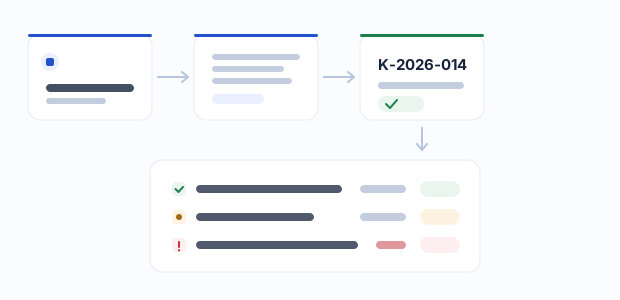
A meeting is scheduled, agenda items are worked through, the decision is numbered (D-2026-014), and the action it creates is tied to a person and a date. No link is left dangling.
AOS is a governance-first platform for associations, foundations, chambers, exchanges, federations and unions. It goes past the member register: it runs the meeting → agenda → decision → action chain end to end and makes the organization's memory answerable.
Open your organization →Set up in minutes · Each organization in its own isolated space · Turkish, English, Russian
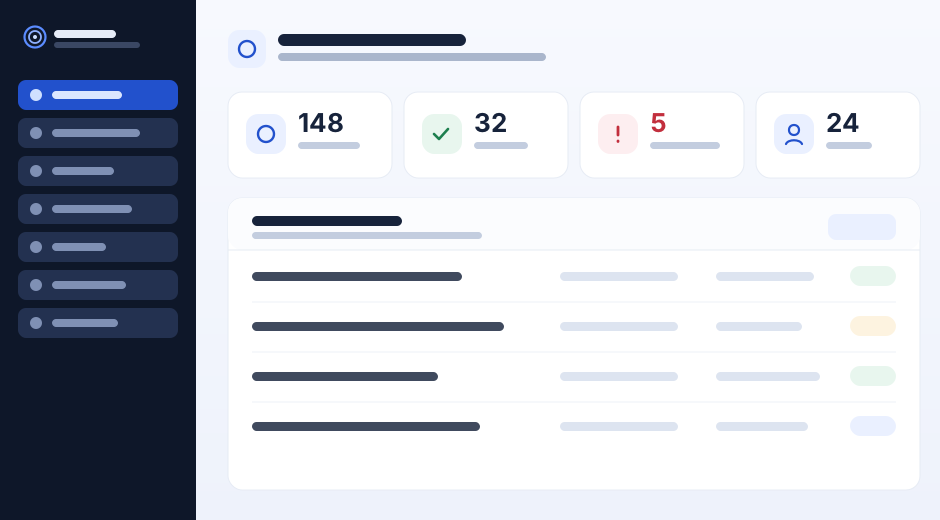
Plenty of software keeps a member list. What AOS cares about is what the organization decided — and what came of it.
A meeting is scheduled, agenda items are worked through, the decision is numbered (D-2026-014), and the action it creates is tied to a person and a date. No link is left dangling.
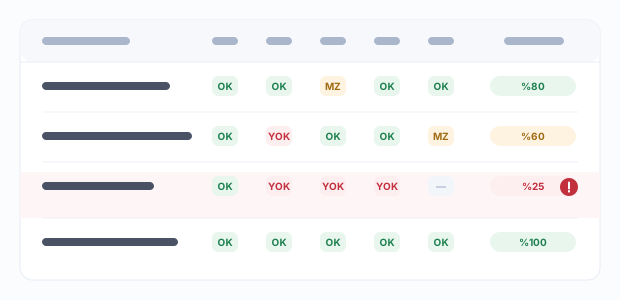
Three-state attendance (present / absent / excused), a per-member attendance rate, and a warning that goes out on its own after two consecutive unexcused absences.
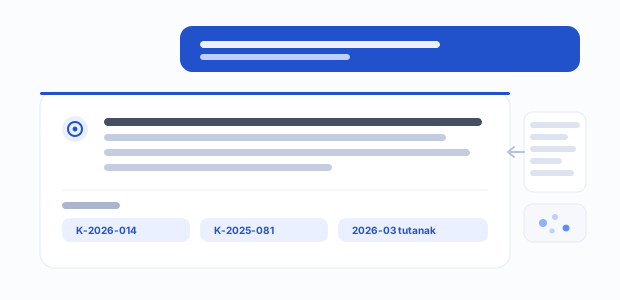
Decisions and minutes are indexed automatically. "What did we decide about this before?" comes back with its sources.
The organization's logo is uploaded once and used in three places: the application shell, the minutes PDF letterhead and email templates.
Permissions are granted per operation; every critical change is written to the audit trail, and the request log shows who tried what.
The interface runs in Turkish, English and Russian, so chambers and unions with international members work from a single installation.
The strategy tree links to goals, goals to KPIs; committee scorecards feed the management-review report and risks go into a register — the organisation's long-term plan is tracked in the same place as its daily work.
The three screens that carry the day-to-day work.
An organization code, a name and the first administrator account. Your organization opens in its own isolated space; your data never falls into another organization's query.
Units, committees, membership types and roles. Invite users or create accounts directly, and give each role only the permissions it needs.
Prepare the agenda, mark attendance, number the decision, tie the action to a person. The minutes come out as a letterheaded PDF.
On a multi-tenant platform one question matters most: how is my data kept apart from my neighbour's?
Every record carries an organization id and every query is bounded by it. Permissions that cross the organization boundary belong to the platform operator alone.
Critical changes are recorded with who and when; separately, the request log shows failed logins and forbidden access attempts.
The assistant drafts minutes and recalls past decisions — but never changes a record on its own. A person approves the suggestion.
Member consent records, data export and deletion requests are defined inside the product.